



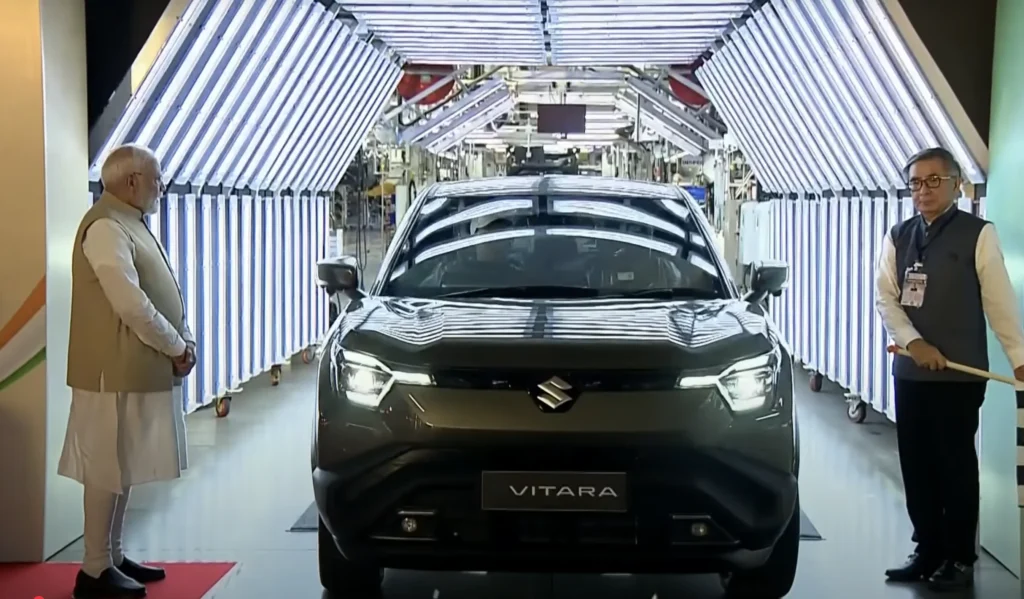
PM Modi Flags Off Maruti Suzuki’s First EV Vehicle Export: India’s Electric Revolution Goes Global: In a landmark moment for India’s automotive and clean energy ambitions, Prime Minister Narendra Modi officially launched the global export of Maruti Suzuki’s first electric vehicles (EVs) from Gujarat today. This historic rollout marks the beginning of India’s aggressive push into the global EV market, positioning the country as a serious contender in sustainable mobility.
Made in India EVs Vehicle to be exported to 100 countries from Hansalpur, Gujarat.India’s Bold Move: Turning Into the World’s Next EV Export Hub
With government support, global investments, and rising domestic demand, India is now poised to become a significant player in the international EV market. This shift not only reflects India’s technological prowess but also strengthens its strategic role globally.
PM Modi sends Maruti Suzuki’s First Electric Cars Worldwide: That step will become a more strategic enterprise globally.
Why India Can Become an EV Export Hub
Several factors are driving this bold ambition:
- Cost Advantage: India’s skilled workforce and affordable labor costs make it a competitive manufacturing destination.
- Government Support: Incentives under schemes like FAME-II, PLI (Production Linked Incentive), and state EV policies are pushing investments.
- Global Demand: Countries in Europe, Africa, and Southeast Asia are looking for affordable EVs – a market gap India can fill.
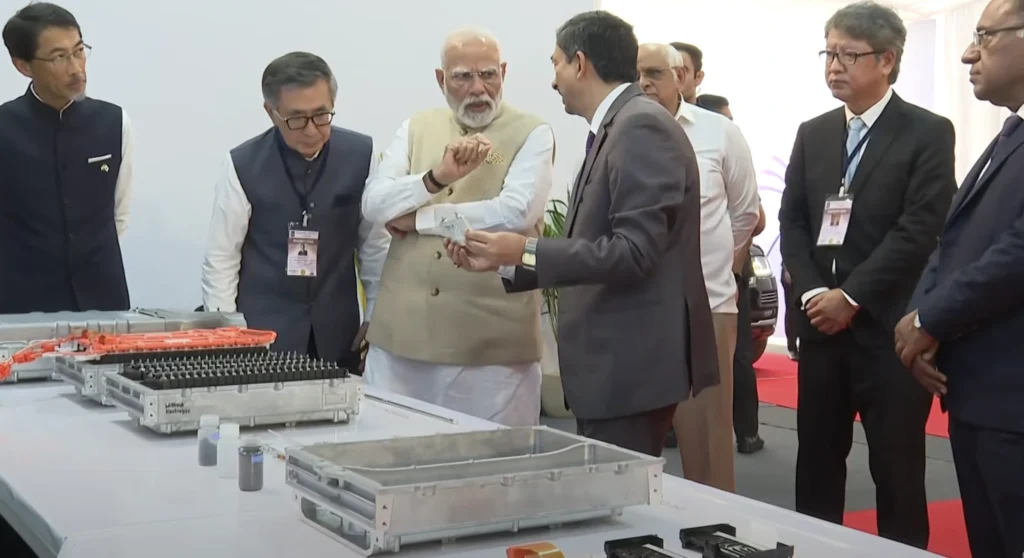
- Infrastructure Growth: Battery manufacturing, charging stations, and R&D hubs are expanding rapidly.
- Make in India Push: The “Make in India” initiative aligns perfectly with the EV export dream.
Together, these elements are fueling India’s Bold Move: Turning Into the World’s Next EV Export Hub
Indian EV Players Going Global
- Tata Motors: Already exporting EV models to international markets, aiming to capture Europe and Asian regions.
- Ola Electric: With its mega EV factory, Ola plans to export two-wheelers to Africa, Latin America, and Europe.
- Mahindra Electric: Targeting both SUVs and compact EVs for export.
- Startups & SMEs: Dozens of smaller EV companies are focusing on components like batteries, motors, and chargers – a key part of exports.
This shift is not limited to cars. Two-wheelers, three-wheelers, and even EV buses are being prepared for global markets.
The Rise of EVs in India
Over the last decade, India has faced pressure to reduce its carbon emissions and dependency on fossil fuels. The push toward clean energy and green transport has made electric vehicles a top priority. Major Indian companies, such as Tata Motors, Mahindra Electric, and Ola Electric, along with global giants like Tesla and BYD, are investing heavily in India.
But the story is bigger than just domestic adoption. The vision is clear – India’s Bold Move: Turning Into the World’s Next EV Export Hub is not just about selling EVs at home, it’s about shipping them worldwide.
The EV That’s Leading the Charge
The first batch of Maruti Suzuki’s electric cars—rumored to be the eVX SUV—is set to be shipped to key international markets, including Europe, Japan, and Latin America. Built at the company’s state-of-the-art facility in Gujarat, the eVX boasts:
- 400+ km range on a single charge
- Advanced lithium-ion battery pack
- Connected car tech with AI-powered diagnostics
- Sleek aerodynamic design tailored for global appeal
Why This Export Matters
This move is more than symbolic—it’s strategic. Here’s why:
| Impact Area | Details |
|---|---|
| Climate Goals | Supports India’s pledge to reduce carbon emissions by 45% by 2030 |
| Job Creation | Boosts employment in EV manufacturing, R&D, and supply chain sectors |
| Economic Growth | Strengthens India’s auto exports and foreign trade balance |
| Brand India | Positions Indian-made EVs as competitive alternatives to global giants |
Industry Buzz & Market Reaction
Auto analysts are calling this a “turning point” for India’s EV ecosystem. Shares of Maruti Suzuki surged by 4.2% post-announcement, with investor confidence riding high on the brand’s global expansion.
What’s Next?
Maruti Suzuki plans to ramp up EV production with a target of 1 million units annually by 2027, and introduce charging infrastructure partnerships across major cities. The government is also expected to roll out new incentives for EV exporters under the PLI scheme.
FAQs
Q1: Why is India focusing on EV exports?
India aims to reduce its oil dependency, create jobs, and become a global leader in manufacturing while contributing to clean mobility worldwide.
Q2: Which companies are leading India’s EV export journey?
Tata Motors, Ola Electric, Mahindra, and several startups are leading the export mission.
Q3: Which countries will import EVs from India?
Markets in Europe, Africa, and Southeast Asia are prime destinations for Indian EV exports.
Q4: What are the main challenges India faces?
Battery raw material dependence, infrastructure gaps, and competition from China are the biggest hurdles.
Q5: Can India really become the world’s next EV hub?
Yes, with policy support, technological innovation, and rising global demand, India is on track to become a major EV export hub.
